
Disciplinary Affair Office

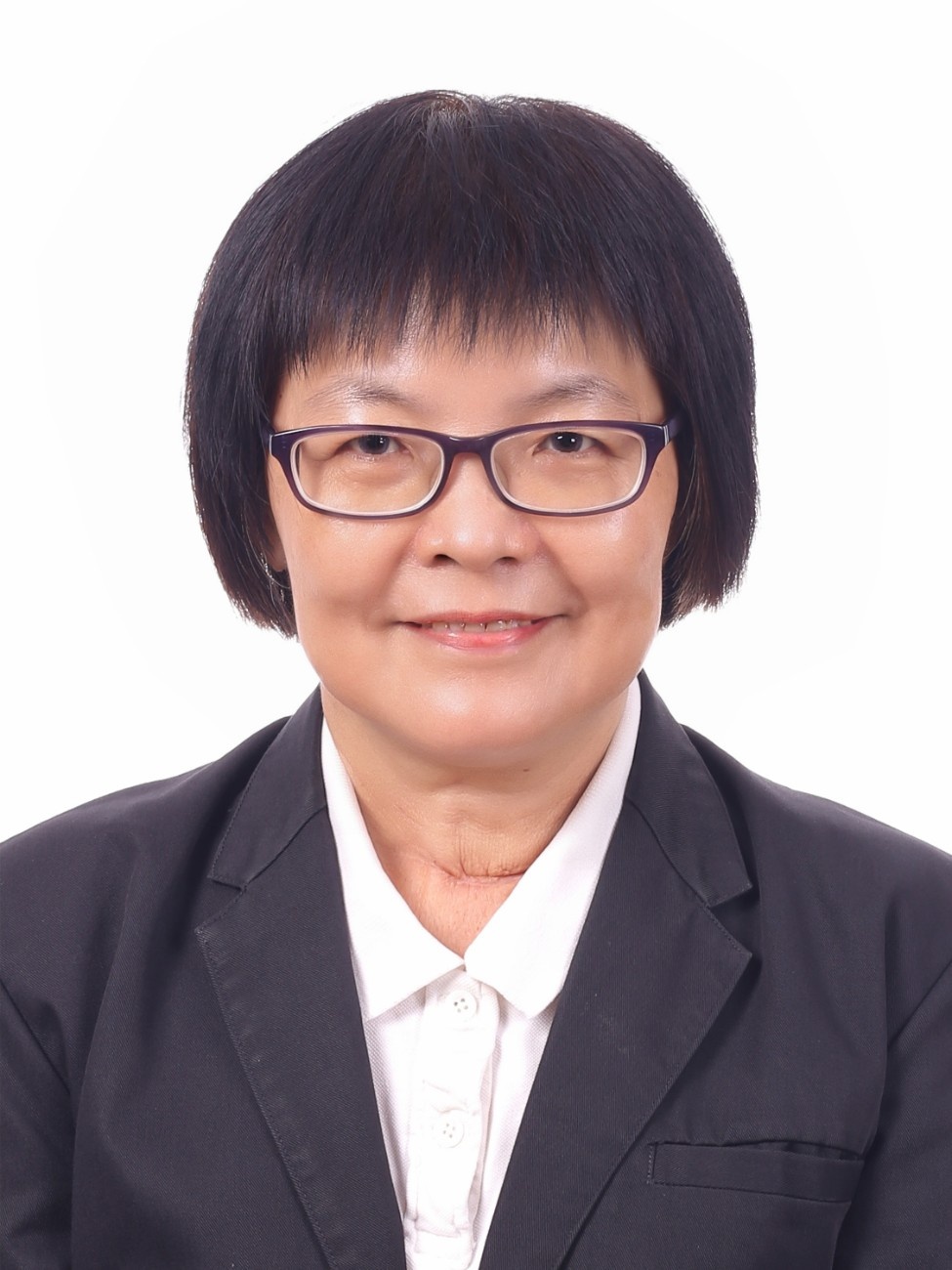
黄爱玲老师

训育主任

杜静颖老师

训育老师

王盈盈老师

训育老师

黄玉梅

训育助理

Hua Lian High School's Rules 2025

Student Code

  1. Boys are to wear white short-sleeved shirts and blue long pants, all according to the standard sold at the school store. White socks and black shoes.
  2. All girls have white short-sleeved shirts, and all blue skirts are standardized to those sold in the sales department. White socks and black shoes.
  3. The school uniform must have the school logo on it.
  4. Students are required to wear a student ID card.
  5. Students must wear school-specified gym clothes.
  6. Students must wear the school’s required culinary uniform for cooking classes.
  7. Students’ socks must be school socks and must cover the ankle.
  8. Students returning to school on non-school days are required to wear a school t-shirt, long pants, and pack shoes.
  9. Students will not be allowed on campus if they are not dressed in accordance with the school’s standards (example: arriving at school in flip-flops).
    Note: Except in special circumstances, only if a request is made to UNITAR.
  10. Students are not allowed to wear colored contact lenses.
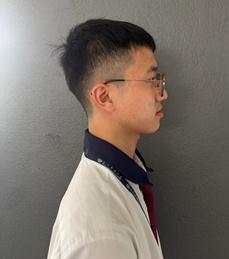
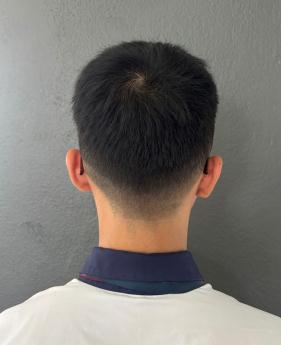
  11. (i) Boys’ Hairstyles:
    a. Boys shall have a short haircut.
    b. The length of the temples is above the middle of the ear.
    c. Side hair must not touch the ears and must be neatly combed and combed.
    d. The hair on the forehead shall be cut short if it touches the eyes when combed down.
    e. No beards.
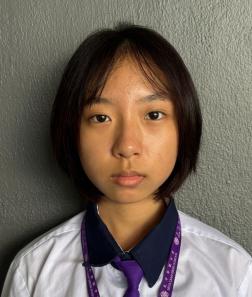
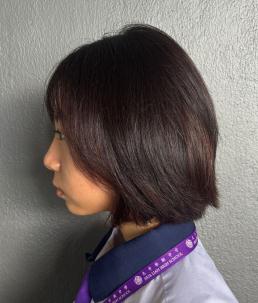
    (ii) Girls’ Hairstyles:
    Those with long hair must follow the following criteria:
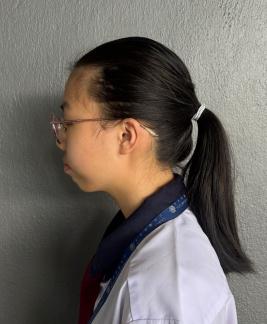
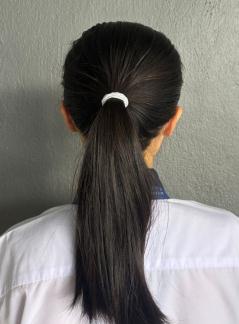
    a. Girls’ hair that is long enough to touch their shoulders must be tied up and only in a ponytail/pillow style.
    b. The hair on the forehead should be clipped if it touches the eyes and the excess hair should be tucked behind the ear.
    c. Hair must be neatly combed with a plain, unadorned hair band.
    Note: Plain colors include: clear, black, white, gray, brown, beige, and blue.
  12. Students are not allowed to have trendy haircuts, perms or hair coloring.
  13. Students whose hair color is natural (as verified by their parents) must go to the Training and Education Office to request a certification card.
  14. Students are not allowed to have long nails, nail polish or nail art.
  15. Students are not allowed to carry or use cosmetics.
  16. Students are not allowed to wear any jewelry. (Examples: rings, necklaces, bracelets, bangles of any material)
  17. To wear Buddhist ropes, chains, beads or medals, application must be made to the Training and Development Office.
    Note: A certification card from UNITAS will be issued upon approval of the application and can only be worn by the student.
  18. Students may only wear no more than one pair of earrings and only in the earlobe. (ear pins, ear loops, grained models)
    Note: male students are not allowed to wear earrings
  19. Students are required to wear their student ID cards (except for Sports Day and Dining Day) and are not carrying them without them.
    Note: Storing it in your pocket or holding it in your hand is not considered wearing it, it must be hung around your neck.
  20. All card covers for student ID cards are standardized to those sold in the vending department and cannot be changed at will.
  21. The card holder for student ID cards can only hold student ID cards, bank cards, timetables and proof cards.
  22. Student ID cards will always need to be redone if they are damaged or if the photo becomes blurry.
  1. When the bell rings, students must enter the classroom and sit in their seats without talking loudly or eating.
  2. If a student is late returning to class, the subject teacher may take care of the situation himself/herself.
  3. When the principal or guest of honor enters the classroom, the class monitor will call out “stand up” and “salute,” and the entire class will stand up and salute the principal or guest of honor before they are allowed to sit down.
  4. Students are required to listen attentively in class, and are not allowed to read books outside the classroom, read books from other subjects or do other assignments, nor talk or doze off.
  5. You may not leave your seat during class without the permission of the teacher; if you have a special accident, you must ask the teacher for permission to leave the classroom.
  6. Students who have questions, or are questioned by the teacher, should stand up and sit down only after the question and answer have been completed and the teacher has given permission.
  7. At the end of class, all students should stand up and salute with the class leader’s command, and wait until the teacher leaves the classroom before sitting down.
  8. When changing periods or dismissing classes, good order must be maintained and no loud noises are allowed.
  9. No late arrivals, early departures, or random entrances or exits during class.
  10. If you want to go out during class, you must apply to your subject teacher and bring your permission slip.
  11. If a student is late for class because of something, please fill out a tardy form in the Training and Recreation Office and have it approved by the Training and Recreation Office before entering the classroom.
  12. Attendance at weekly meetings, walk-in classes, physical education classes, or classes in the computer room, science room, or cooking room is subject to lining up and arriving at the location in question within five minutes.
  13. In case of teacher’s absence, the class leader is responsible for maintaining order in the classroom, while students should automatically study their homework in the classroom without making any noise.
    Remarks: The class monitor can check if there is a substitute teacher for the relevant subject. (Bulletin board in front of the Education and Manpower Office)
  14. Duty students are responsible for cleaning up after themselves according to the rota and making sure that the classroom is kept neat and tidy.
  15. Whiteboards may not be scribbled on unless authorized by the instructor.
  16. Students will not be allowed in the classroom after school without permission.
    Note: If you need to stay in class, you must apply to the office.
  17. Students are required to take care of all equipment and utensils in the classroom and report any damage or loss to the homeroom teacher and inform the Office promptly. Students are required to pay for any damage caused by vandalism. If no student acknowledges the damage, the whole class will be held responsible.
  1. The main purpose of this rule is to maintain a clean and tidy learning environment and to foster a spirit of hygiene and service among the students.
  2. All enrolled students are obligated to serve on a rotating basis.
  3. Classroom and corridor cleaning is the responsibility of the classroom student.
  4. Tidy Duty Students, who are assigned by the Head of the Tidy Unit and approved by the class tutor, fill in three copies of the rota, one to be posted in the classroom, one to be kept by the class tutor and one to be sent to the Training and Development Office for record.
  5. The Head of the Tidiness Unit shall always be responsible for supervising the work of the students on duty, and if there are any absentees, they shall be recorded at all times and handed over to the class tutor for processing, and serious cases shall be sent to the Training and Guidance Office for notation and punishment.
  6. Students are expected to assist at all times in keeping classrooms, corridors, and school grounds neat and clean, and not to throw confetti or trash.
  7. Broomsticks and other cleaning utensils must be neatly placed at the back or front corner of the classroom.
  8. Drawers should always be kept clean and free from any paper trash.
  1. Students are expected to be on time for school. Early dismissal is subject to the approval of the Office of Discipline and Counseling.
  2. To be effective, a student’s leave of absence must be completed and signed by the parent or guardian and the class advisor, and then approved by the Training and Guidance Office.
  3. There are five types of leave: sick, personal, bereavement, official and special.
  4. Students who are absent from school due to illness must attach a doctor’s note to substantiate the absence.
    Remarks: If there is no doctor’s certificate, it will be treated as casual leave.
  5. If a student calls in sick, the paperwork must be completed within three days of the resumption date, after which the student will be considered absent.
  6. Students who wish to take an excused absence must do so in person three days in advance and attach a letter from their parents or guardians certifying their absence.
    Remarks: If there is a special accident and the student is not able to take the leave in advance, the parent or guardian may inform the class teacher whowill then inform the Discipline and Education Office. However, the absence will be processed immediately on the day of resumption of classes.
  7. Students will be granted a three-day,demerit-free bereavement leave for the death of an immediate family member (parent, grandparent, sibling) and a personal leave for the death of a distant relative. The anniversary of the death is considered a personal leave.
  8. Students of this school who are unable to attend various assemblies or other required activities due to accidents or illnesses shall be excused in accordance with these rules, and any unauthorized absence without an excused absence or unapproved excused absence shall be treated as truancy and shall be subject to a demerit.
  9. Anyone who leaves the school without permission during class time will be punished for truancy and receive a major demerit.
  10. Student absenteeism/tardiness and conduct demerits will be handled according to the rules set by the Discipline and Education Office.
  11. Three (3) conduct points will be deducted for each absence.
  12. Personal leave 1 deduction of 1 conduct point.
  13. One point will be deducted from your conduct for each tardy.
  14. One point for conduct will be deducted for one early dismissal.
    NOTE: Early dismissal due to illness is exempt from demerit points and must be accompanied by a doctor’s certificate.
  15. One truancy will result in 9 points for conduct and one demerit.
  16. On the 2nd day of a student’s continuous absence, the class advisor must call to express concern and notify UNITAS. After 35 consecutive days of absence, the student will receive the first warning letter from the counseling office. After 3 warning letters, aletter of expulsionwill be sent out by the Discipline Office. Parents are required to come to the school within 7 days of receiving the letter of expulsion to meet with the Principal and explain why their child should not beexpelled.
  17. Full attendance means no early departure ˎ Tardiness and absence (official leave, special leave are not considered as absence).
  18. Students who take a driver’s license test on a school day must have a car test certificate issued by JPJ. (Special leave, exemption from deductions)
  1. Whenever the school holds weekly meetings, lectures, or any assembly activities, students are required to be present, and failure to do so will result in an unexcused absence.
  2. Before assembling, students should stand or sit down in the meeting place according to the instruction of the senior, and should not stay in the classroom or delay along the way, and the offenders will be regarded as tardy.
  3. During assembly, students are to remain silent; they are not to sleep, or talk, laugh, or leave the class line without permission.
  4. If, during an assembly, you become too ill to continue, you must immediately notify the class advisor or whatever teacher is closest to you.
  5. Anyone receiving an award in the assembly must quickly get out of the line, bow and then shake hands when going on stage, respectfully receive the award and then return to his/her position only according to the instructions of the assembly.
  6. Crossing classes during weekly meetings or assemblies is strictly prohibited, and those who do so at will will be dealt with by school rules.
  7. Participate in assemblies (auditoriums) of no more than one hour, no water cans or jackets allowed.
  8. Students must be in full school uniform at the time of assembly.
  1. Students must line up in the cafeteria to purchase food, not scramble.
  2. Any food purchased in the cafeteria in a plate and bowl is allowed to be consumed only within the confines of the cafeteria.
  3. Dispose of used dishes, cups, spoons, chopsticks or food scraps in the designated bucket after the meal.
  4. Students may not enter the cafeteria kitchen.
  5. Students are not allowed to order take-out through any channel or means.
  6. Students may not purchase any food or beverages from the cafeteria during school hours.
    Note: Special circumstances must be requested from the UNITEC Office and a note will be issued upon approval of the request before food can be purchased.
  7. Students are not allowed to bring food into the basketball court area.
  1. Before class (before 7.30am), hand in the cell phone to the student in charge of the class and hand it in to the cell phone room.
    Remarks: Students who are late in handing in their cell phones are required to hand them in to the Discipline and Education Office. (Late retrieval)
  2. Students caught messing with and posting videos associated with the school will be expelled from the program.
  3. If a student is found to have a cell phone in his/her possession during class, he/she will be dealt with as follows:
    First time: he/she will be given a demerit and will be sent to the Educational Records and Programs Office for 7 days and the SIM card will be returned to the student.
    The second time: the student will be given a demerit and the SIM card will be returned to the student after 14 days in the custody of the Educational Records and Programs Office.
    Third time: a minor penalty will be imposed, the SIM card will be kept by the Department for 30 days and the student will be given back the SIM card.
  4. Cell phones of dormitory students can only be kept at the House Office. If a student is found to have a cell phone in his/her possession and at the same time handing over the cell phone to the House Office, he/she will be dealt with according to the following conditions:
    First time: one demerit will be given to the student and both cell phones will be handed over to the Training and Education Office for 14 days and the SIM cards will be returned.
    The second time: one demerit will be recorded and both cell phones will be handed over to the Training and Education Office for 30 days and the SIM cards will be returned.
    Third time: one demerit, both cell phones will be kept in the training center for 45 days and the SIM cards will be returned.
    Note: The period of detention does not include weekends or holidays. (Calculated on school days)
  1. In order to encourage students to be upwardly mobile, correct students’ wrongdoings, supervise students to be good, and prevent them from committing crimes, the following rules on rewards and punishments have been established :
    The rewards and punishments listed in these rules are as follows:

    Rewards: Merits, Minor Merits, and Major Merits (extra points, certificates of merit, public praise, etc.)

    Punishments: Weaknesses, Minor Misdemeanors, and Major Misdemeanors (demerits, expulsion from the school, or expulsion from the school, etc.)

  2. Merit – Merit shall be awarded if one of the following requirements is met:

    2.1 Those who are eager to help others.

    2.2 Those who have served with distinction on campus.

    2.3 Gleaners.(RM10 or above, only if the student retrieves it, the finder will be credited)

    2.4 Those who have demonstrated a spirit of cooperation and mutual assistance to their classmates.

    2.5 Automatic public servant.

    2.6 Good performance in a group or society.

    2.7 Those selected as class officers will be responsible for their duties and will excel in their performance.

    2.8 Other merits.

  3. Minor Merit – A person who fulfills one of the following requirements shall be given a minor merit:

    3.1 A person who picks up things and doesn’t forget them. (RM500 or above, only if the student finds it, the person will be credited with a minor merit)


    3.2 Protecting public property so that the interests of the group will not be victimized.

    3.3 Enthusiastic about the school sports, and those who have made achievements.

    3.4 Those who have acted with bravery and courage, and those who can protect the interests of the whole group or the classmates.

    3.5 Those who respect the elders and care for the young, and those who have made remarkable achievements.

    3.6 Other persons who should be given a minor merit.

  4. Major Merit – Major merit shall be awarded to those who meet one of the following requirements:


    4.1 Those who provide good advice and take the lead in improving the reputation of the school.

    4.2 Those who demonstrate exceptional performance that enhances the reputation of the school.

    4.3 Those who perform exceptional acts of bravery and courage that result in outstanding achievements.

    4.4 Those who demonstrate exceptional behavior that is exemplary for the entire student body.

    4.5 Any other behavior that is worthy of major merit or special award. The person who has performed a special act of bravery and has obtained outstanding results.

  5. Defects – Defects shall be recorded if they meet one of the following requirements:


    5.1 Not bringing textbooks and workbooks to class.

    5.2 Leaving the classroom without permission or shouting during class time.

    5.3 Loitering outside the classroom after the bell has rung.

    5.4 Anyone who is slow in doing things or taking action will not be a duty worker.

    5.5 Those who do not meet grooming standards.

    5.6 Those who bring undesirable books, contraband, playing cards, CDs, video games, etc. to school.

    5.7 A person who is verbally abusive or rude.

    5.8 Speaking in tongues, using foul language and making indecent gestures.

    5.9 Spitting and littering.

    5.10 The collection is not rule-based.

    5.11 Minor violations of school rules.

    5.12 Other persons who qualify for a warning.

  6. Minor faults – A person who meets one of the following requirements shall be given a minor fault:


    6.1 Disrespectful to teachers and school employees.

    6.2 Persons who engage in deceptive behavior.

    6.3 Those who are in love and behave in an undignified manner.

    6.4 Persons who dye their hair.

    6.5 Absence from assemblies and or events without permission.

    6.6 Vandals (in minor cases).

    6.7 Anyone who willfully defiles the campus.

    6.8 Persons who do not observe traffic order.

    6.9 Attempted cheating in examinations.

    6.10 A person who willfully disobeys the guidance of a teacher or supervisor.

    6.11 A person who is willfully playful and boisterous in or near a classroom.

    6.12 Other cases in which a minor demerit is appropriate.

  7. Major demerits – A person who meets one of the following requirements shall be given a major demerit:


    7.1 Anyone who intentionally destroys public property (under aggravating circumstances).

    7.2 Cheating on examinations or assisting others to cheat.

    7.3 Persons who have committed theft.

    7.4 Misbehavior on or off campus that is detrimental to the reputation of the school.(UNITAR will issue a letter of dismissal)


    7.5 A person who uses or falsifies parental paperwork or signatures.

    7.6 Unauthorized alteration of grades.

    7.7 Publicly insulting the division head.(UNITAR will issue a letter of dismissal)


    7.8 Anyone who instigates a trend that disrupts the group.

    7.9 Smokers, e-cigarettes, gamblers, drinkers.(UNITAR will issue a letter of dismissal)


    7.10 Possession of pornographic publications, videotapes or illegal publications.

    7.11 Establishment of factions to bully fellow students. (Dismissal letter will be issued by UNITAR )

    7.12 Persons who fight each other or gather a crowd.(UNITAR will issue a letter of dismissal)


    7.13 A person who offends the reputation of another person or uses words against a person.

    7.14 Deliberate truants.

    7.15 Those who attend dances or go to undesirable places.

    7.16 Other cases that may qualify for a demerit.

  8. Dismissal, Expulsion – A person who is suited for one of the following shall be dismissed or expelled from school.


    8.1 Anyone who is grossly rude to a teacher, challenges or threatens a teacher.

    8.2 A person who takes part in any hooligan gathering, or who is a partner in a fight. (Bullying)

    8.3 Collusion with persons outside the school with the intention of disrupting the school.

    8.4 A person who has completed three major faults after offsetting his or her merits and demerits.

    8.5 Those whose conduct grades are listed in the D category.

    8.6 Persons who are disruptive and behave in an obscene manner.

    8.7 Absenteeism in excess of the required number of hours. (After receipt of 3 warning letters)

    8.8 Possession of ecstasy or other contraband. (E-cigarettes or cigarettes, playing cards)

    8.9 Any other person who is eligible for withdrawal or expulsion from the University.

    Special Remarks:
  9. Matters Number of faults
    To be in love. One demerit.
    Electronic cigarettes Two demerits
    Bullying Three demerits.
    Gambling One or two demerits (depending on severity)
    fights sudden big mistake
    Rudeness to teachers One or two major faults (depending on the severity of the case)

    *:: Stacking of demerits

  10. Rules of Merit for Good Performance in Competitions The following are the rules for rewarding good performance in intramural and extramural competitions:
  11. Ranking Intra-school/ Intercounty/ Regional Interstate National
    First place 1 minor merit 1 Great merit 2 Major
    Second Place 2 Pros 2 Minor 1 Major merit
    Third Place 1 Advantages 1 Minor power 2 Minor merits
    Winner/Consolation Prize 1 Merit 1 Minor Merit 1 Minor Merit
  12. Rewards for school group activities: The leader of each group, the president of the club or the class president who performs well and is recommended by the teacher will be credited with a maximum of one minor merit. If the performance is not good or the teacher does not recommend them, the credit will be canceled.
  13. Class committee members, club committee members, seniors, and unit attendants will receive a maximum of two merit points for outstanding performance on the recommendation of their teachers.
  1. Processing and documenting student merit is a task for all teachers.
  2. Teachers are required to record the details of the offense in the “Student Behavior Notice” and submit it to the Discipline Office.
  3. After handling a student’s case of foul play, UNITA files the relevant records.
  4. The rewards and punishments for student behavior shall be in accordance with the above provisions, but may be changed depending on age, motivation, and means.
  5. For minor offenses, the Office will notify the class advisor, who will in turn notify the parents of the offender.In the case of amajor offense, the Education Office will directly notify the parents or guardians of the student and report the offense to the class advisor.
  6. Special awards must be signed by the appropriate department director and will be approved by the President in the event of a dispute.
  7. Punishments such as expulsion from the school or from the school are subject to the approval of the Disciplinary Panel. The UNITAR Office will inform the class adviser.
  8. In the event of a student committing a major disciplinary offence beyond the scope of this policy, a special meeting of the Disciplinary Panel
    will be convened to deal with the matter. The Disciplinary Panel consists of the Headmaster, Deputy Headmaster, Discipline Office, Headmaster, Class Teachers and teachers concerned.
  1. Students’ conduct marks are assessed at the middle of the school year and at the end of the school year before the examination. Conduct marks are recorded separately for the first and second half of the year, with the second half being the full year’s conduct mark.
  2. Conduct scores and grades are categorized as follows:
    Upper A (A+): 95 points or more
    Upper A (A): 88 – 94.99 points
    Upper B (B+): 80 – 87.99 points
    Upper B (B): 70 – 79.99 points
    Upper C (C+): 65 – 69.99 points
    Upper C (C): 60 – 64.99 points
    Upper D (D): 59.99 points or less
  3. A basic conduct score of 75 will be given to students who do not have good behavior or bad behavior in school.
  4. The UNITAS Office relies on the student’s record of merits and demerits as a criterion for grading before assessing the student’s conduct at mid-year and at the end of the year.
  5. Nine points will be added to the conduct score for each major merit. Three points will be added for minor merits. One point will be added to a merit award.
  6. A major demerit will result in a deduction of nine (9) conduct points, a minor demerit will result in a deduction of three (3) points, and a demerit will result in a deduction of one (1) point.
  7. Students’ merits and demerits are recorded on their report cards.
  8. Points will be deducted for frequent substandard hairstyles and uniforms.
  9. Three points will be deducted for one absence, one point for one excused absence, one point for one tardy, and one point for one early departure.
  10. Anyone who misses an assembly or skips a class without an excuse will receive a demerit.

Upgrade conditions

  • Conduct over 60 points for the year.
  • Total average for the year was over 50 points.

graduation requirement

  • Conduct over 60 points for the year.
  • Total average for the year was over 50 points.
  • If a senior does not meet the overall average for the year, the school will award a diploma if he/she obtains a minimum of five passes on the High School Regular Examination.

Boys hairstyle norms:

A. Boys’ school uniforms do not need to be tucked in, but must be neatly worn and have buttons that can be fastened one inch from the neck.
B. Students’ hair must be neatly combed and must not cover the eyebrows/collar or ears.
C. Dyeing of hair and any hairstyles that are not in line with student status are strictly prohibited. (Please refer to the school rules)
D. Student ID card is part of the school uniform and must be worn at all times, failure to do so will be considered as a dress code violation.
*If students are found to have non-compliant hair, the school will arrange for a designated barber to carry out the necessary repairs tothe hairstyles prescribed by the schoolat their own expense, and students may not object to this.
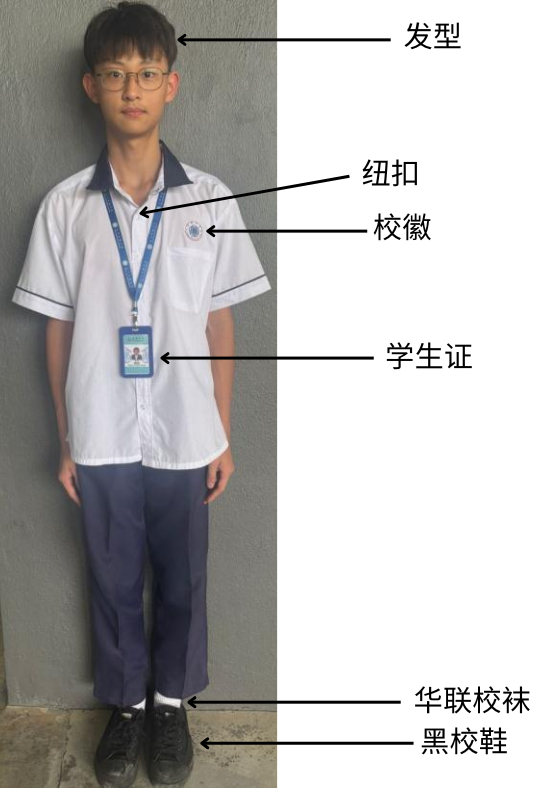
Boys' School Uniform Code:

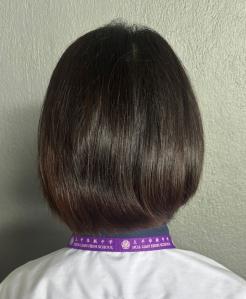
Short hair norms for girls:

Long hair norms for girls:

A. Girls with short hair must have their hair neatly combed and must not cover their eyebrows/collar.
B. Hair must be neatly combed with a plain, unadorned hair band.
Note: Plain colors include: black, white, gray, brown, beige, and blue.
Girls are required to keep their uniforms neatly tied with a bow.
C. Dyeing hair and growing any hairstyle that is not consistent with student status is strictly prohibited.
D. The head of the skirt should not be purposely rolled and folded. Sewing is optional for those whose skirts are too long, but they need to meet the length standard.
E. Student ID card is one of the equipment of the school uniform, students must wear it with them, and those who do not wear it will be regarded as a dress code violation.
*If a student is found to have non-compliant hair and is repeatedly advised not to listen, the school will arrange for a designated barber to carry out the necessary repairs tothe hairstyle prescribed by the school, at his/her own expense, and students may not object to this.
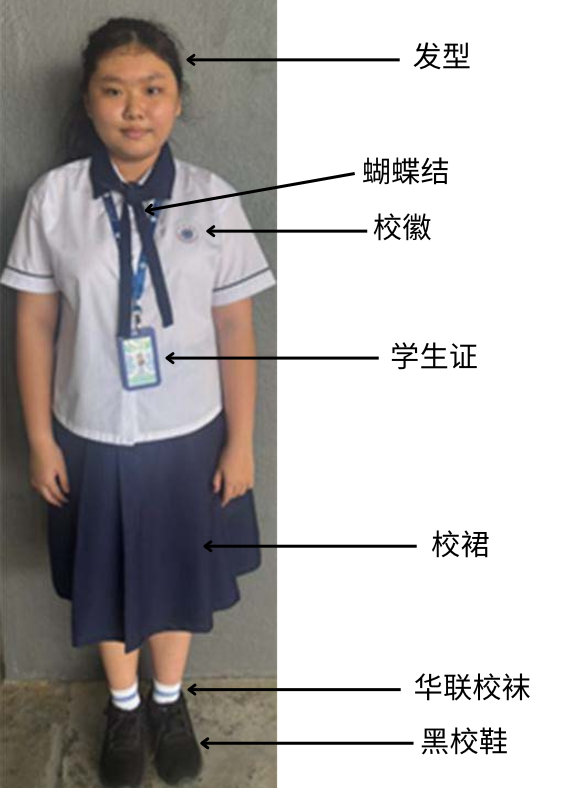
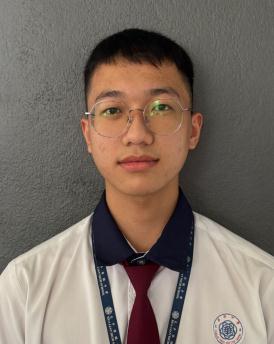
Girls' School Uniform Code: